Choosing the Right Protection for Your Camera in Water Productions
Selecting the right gear can make all the difference on set. When water comes into play, protecting your camera becomes essential. This guide explores the advantages, differences, and recommended uses of Splash Bags and Underwater Housings.
Splash Bags vs. Underwater Housings
Cameras are not waterproof, so they need proper protection when working near or inside water.
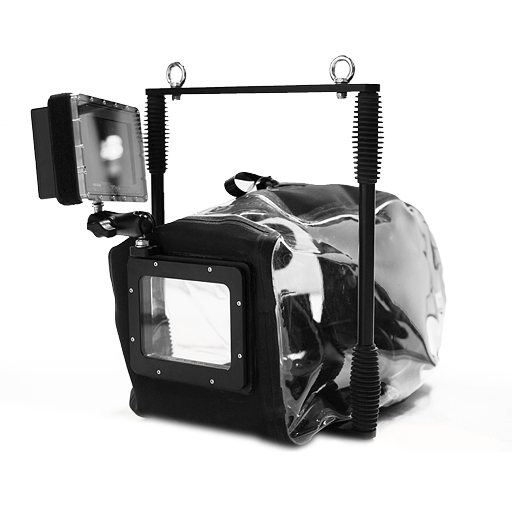
- Splash Bags: designed to shield the camera in situations with surface water or splashes. Ideal for shots that only skim the surface.
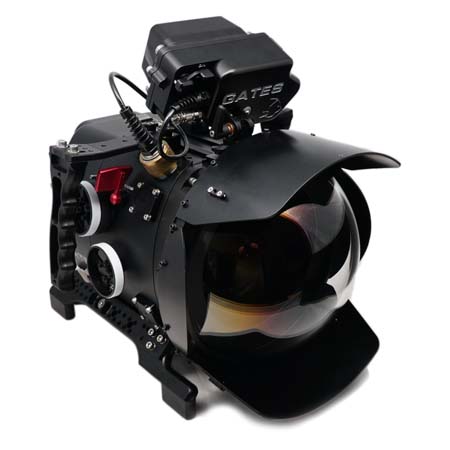
- Underwater Housings: required when the camera must remain fully submerged for long periods or at greater depths.
In short, splash bags offer convenience and speed, while housings guarantee maximum safety and control.
Benefits and Considerations of Splash Bags
Benefits:
- Portability: lightweight and easy to carry thanks to their polyurethane construction.
- Ease of use: simply slide in the camera, zip it up, and start shooting. Lens changes are quick and simple.
- Versatility: compatible with different camera models.
- Cost-effective: the most affordable option for water protection.
Considerations:
- Fragility: can be damaged on hard surfaces or by sharp edges.
- Leaks: must always be tested on the day of the shoot without the camera inside.
- Limited depth: not suitable for extended immersion beyond 60 cm (2 ft).
- Restricted control: require a remote lens control since they lack external controls.
Benefits and Considerations of Underwater Housings
Benefits:
- Durability: built from aluminum, far more resistant than splash bags.
- Safety: reliable sealing against leaks, capable of depths over 30 meters (100 ft).
- Full control: allow direct operation of focus, iris, and zoom from outside the housing.
Considerations:
- Maintenance: seals and O-rings must be inspected before every use.
- Camera-specific: each housing is designed for a specific camera model.
- Setup time: requires removing accessories, attaching gears, vacuum sealing, and securing the housing.
- Operational limits: lens changes are slow; ideally, have a spare body inside the housing for the entire day.
Essential Maintenance
For both splash bags and housings, thorough cleaning and drying after each use will extend their lifespan and ensure safety in future productions.
This infomation will help you decide whether your shoot calls for the speed of a splash bag or the robust safety of an underwater housing.

